Dollar Eases; US GDP Contracts, Fed Vigilant, Drug Passes Test
Dollar Eases; US GDP Contracts, Fed Vigilant, Drug Passes Test Comm/EM CCY’s Up Most, Stocks, Oil Soar, Data Deluge Next

Summary: It was one of those days filled with events and data releases that did not disappoint. US Q1 2020 GDP fell by 4.8%, worse than median forecasts of a 4% contraction, and following a 2.1% expansion rate in Q4 2019. It was the steepest decline in over a decade. The Dollar’s reaction was limited, easing against its major rivals, falling most against Commodity and Emerging Market currencies. The Federal Reserve left interest rates unchanged which was widely expected. Fed Chair Jerome Powell reiterated that the US central bank will remain vigilant and do what it takes to shore up the economy which has been battered by business closures due to the coronavirus outbreak. Equities soared as pharmaceutical company Gilead reported that its antiviral drug Remdesivir, helped improve symptoms in Covid-19 patients who had taken the drug earlier. Risk sentiment improved which also weighed on the Greenback. The Euro was up 0.33% to 1.0880 in late New York (1.0823) ahead of today’s Eurozone GDP report and the ECB’s policy rate meeting and press conference. Sterling rose against the broadly based weaker US Dollar to 1.2470 from 1.2425. Commodity currencies soared with the Australian Dollar extending its gains a further 0.82% to 0.6555 (0.6495). A rebound in West Texas Intermediate Crude oil prices by 25.5% (USD 15.29) saw the USD/CAD pair tumble to 1.3885 from 1.3992. The US Dollar eased marginally by 0.12% against the Japanese Yen to 106.62 (106.86). Emerging Market currencies rose the most against the US Dollar. The South African Rand jumped 2.45%, USD/ZAR ended at 18.1130 from 18.6530. The Dollar finished 1.04% against the Indian Rupee to 75.27 (76.10).
Better earnings and the Gilead report saw Wall Street stocks surge. The DOW was 2.7% higher at 24,745 (24,145) in late New York while the S&P 500 soared 3.3% to 2,960 (2,870). Global bond yields were little changed. The key US 10-year bond rate was last trading at 0.63% from 0.61% yesterday.
Other data released yesterday saw Australia’s Q1 Trimmed Mean CPI at 0.5% against forecasts of 0.3%. US Pending Home Sales dropped to -20.8 worse than forecasts at -13.3%.
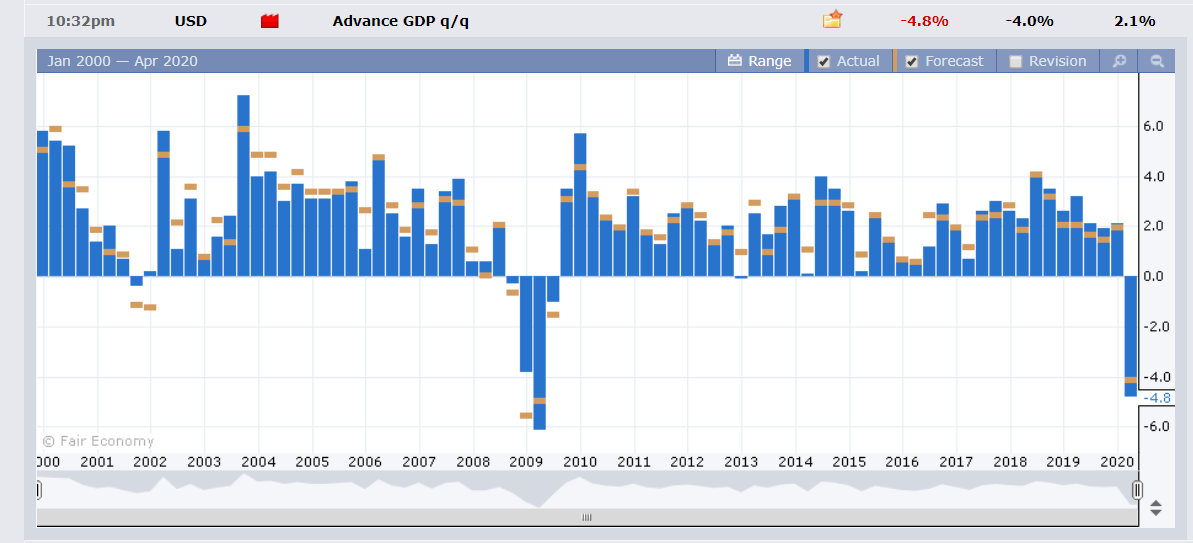
On the Lookout: The Dollar’s reaction to last night’s events and data releases was not huge. However, the worse than expected contraction in the US GDP for the January-to-March period lessens the chance of a V-shaped recovery. This will keep a lid on the Greenback for now. The spotlight now falls on the rest of the world, beginning with the Eurozone’s Q1 GDP and the ECB meeting outcome and press conference that follows. Today’s data deluge will be closely monitored. The main event is the ECB meeting and announcement. The ECB is expected to leave interest rates unchanged but expect President Christine Lagarde to keep a dovish stance.
Japan kicks off a busy Asian reporting day with its Preliminary Industrial Production, Retail Sales data. Later in the day, Japanese Consumer Confidence and Housing Starts follow. China releases its April Manufacturing and Non-manufacturing PMI reports for April, with both forecasting improvements from the previous month. New Zealand sees its ANZ Business Confidence Index. Australian Private Sector Credit and Quarterly Import prices follow. Europe kicks off with French, Spanish and Eurozone Flash Q1 GDP, German Unemployment Change, Italian Preliminary CPI. Swiss Retail Sales follow next. The Eurozone GDP is forecast to contract -3.7% from +0.1% the previous quarter. Canada’s monthly GDP follows. Finally, the US reports its Weekly Unemployment Claims, Personal Spending, Core PCE Price Index, Personal Income and Chicago PMI.
Trading Perspective: We may well be approaching the time where while the US data is bad, the rest of the world may be worse. We start off with Europe and the release of the Eurozone’s Q1 GDP. Europe went into lockdown ahead of the United States, in mid-February. Any number larger than the expected contraction of -3.7%, say around -4% or greater will see the Euro plunge. Which will lift the US Dollar against its other major peers. The Aussie and Kiwi outperformed and will continue to do so in the current environment. However China’s data today could put the breaks on any further gains.
AUD/USD – Battler Retains its Bid, but 0.6600 Cents is a Big Ask
The Australian Battler extended its advance against the US Dollar, lifting to an overnight and fresh 7-week highs at 0.6558 finishing in New York at 0.6553. The Aussie has benefited from an overall weaker US Dollar, and stronger commodity prices. Australia’s government is also seen a relatively successful in batting Covid-19 and the quick return benefits the economy and augers well for the future. Australian CPI grew an annualised 2.2% from 1.8%.
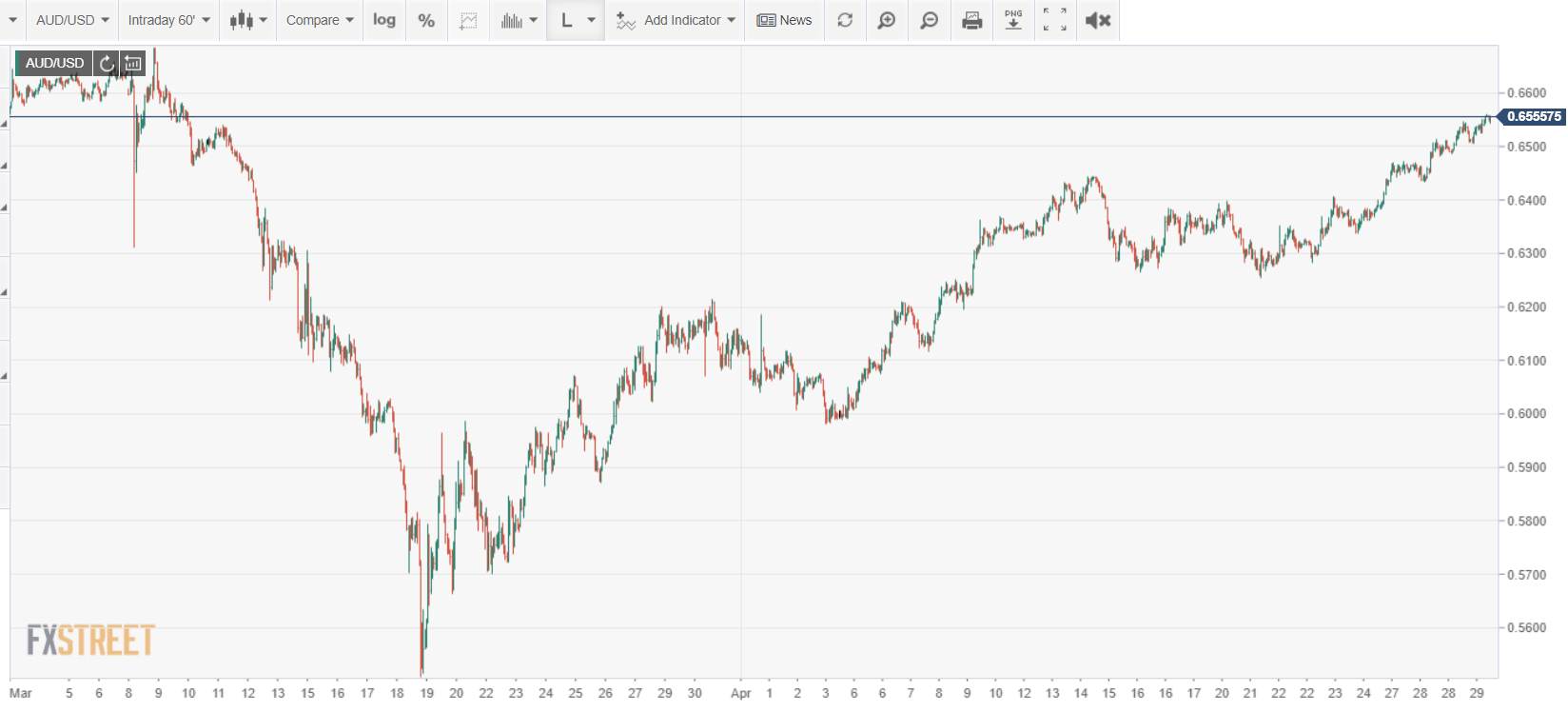
Today sees Chinese Manufacturing PMI data which are released this morning as well as Australia’s Private Sector Credit and New Zealand’s ANZ Business Confidence Survey. A disappointment in the data could take the shine out of the Battler.
The 0.66 cent represents immediate and strong resistance for the AUD/USD. The Aussie’s drop from 0.70 cents at the start of this year held initially around the 0.66 cent mark. Expect a pullback from that 0.66 cent area to the 0.63/0.64 cent support before any sustained rally higher. Immediate support can be found at 0.6510 and 0.6480 followed by 0.6440. Look for a likely range today of 0.6470-0.6570. Prefer to sell into any rallies today.
EUR/USD – Up, but Underperformance Continues, Spotlight on GDP, ECB
The Euro managed to rebound off its lows by 0.33% to 1.0878 from 1.0828 yesterday, thanks to the broad-based US Dollar fall. The shared currency traded to 1.08856 highs overnight, falling just short of 1.0900 once again. EUR/USD had an overnight low of 1.0818 before its rebound against the Greenback. The currency gets its big test today with the double whammy of the Eurozone’s Q1 GDP followed by the ECB policy rate meeting decision and press conference.
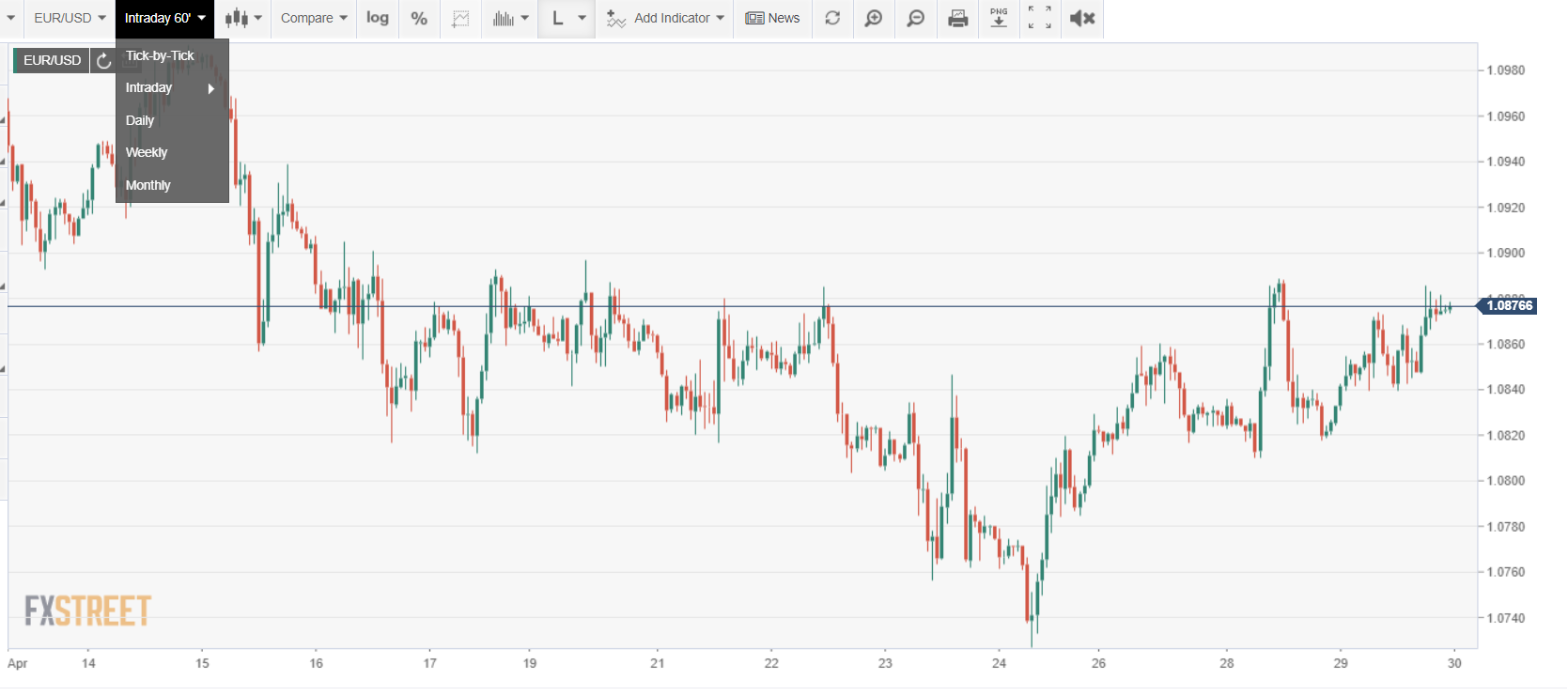
Europe’s Q1 GDP is forecast to contract by -3.7% from the previous quarter’s 0.1% gain. BK Asset Management’s Managing Director Kathy Lien points out that “Europe entered its lockdown in mid-February, 3 weeks before major US states so the economic toll will be more significant.” Lien has a very valid point. The ECB meeting will also impact the shared currency. While the ECB is not expected to change policy, President Christine Lagarde and her colleagues will remain dovish.
Bear in mind that the speculative market positioning is long Euro bets to their biggest since June 2018. EUR/USD has immediate resistance at 1.0900 followed by 1.0940. Immediate support can be found at 1.0840 followed by 1.0810 and 1.0780. Look for a likely trading range today between 1.08 and 1.09. Prefer to sell rallies.
USD/CAD – Breaks Lower, Oil Up, USD Down, CAD GDP Next; 1.3850 Solid
Against another one of the commodity trio of currencies, the Loonie, the US Dollar slid 0.76% to 1.3885 from 1.3995 yesterday. A rebound in Oil prices led by the 25% rally in West Texas Immediate and the overall weaker Greenback boosted the Loonie.
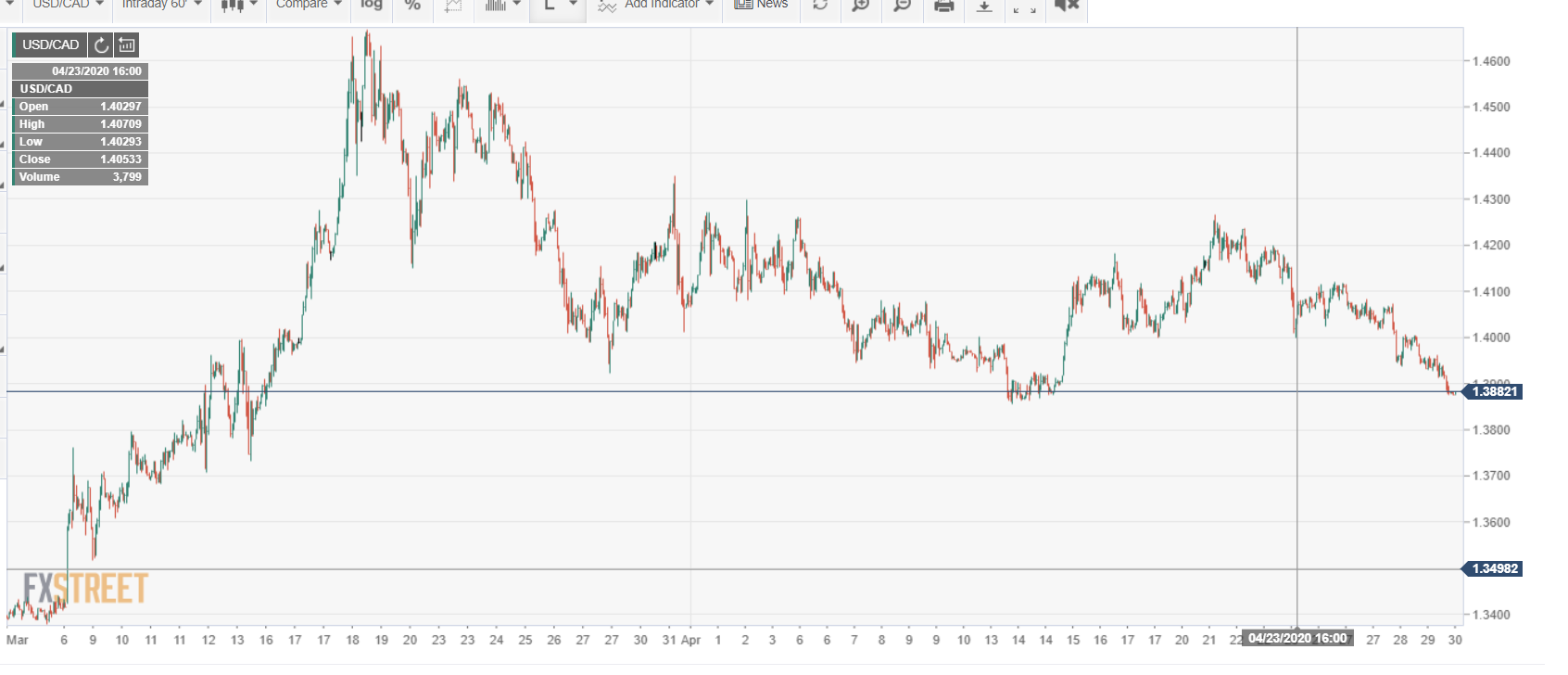
USD/CAD traded to an overnight low at 1.38779 before settling at 1.3885 in late New York. Immediate resistance lies at 1.3880 followed by 1.3850. Immediate resistance can be found at 1.3910 followed by 1.3960. Canada releases its February GDP report tonight with expectations of a 0.1% expansion matching January’s 0.1%. The coronavirus outbreak will not affect the data. Canada’s big test comes next week with the release of its Employment report which is expected to seel its biggest drop in over 20 years.
Until then, the USD/CAD will be dictated by the US Dollar. Expect a likely range today of 1.3870-1.4120. Prefer to buy dips, a turnaround higher for USD/CAD should ensue.
Reporting by Michael Moran. Filed 30 April 2020, 01:18 GMT.


