Quant is now the tokenised deposit technology layer under interbank rails on both sides of the Atlantic, and both deals were made public on September 24, 2026. In New York, The Clearing House selected Quant to power its On-Chain Money Initiative. In London, UK Finance said the Great British Tokenised Deposit (GBTD) project had completed its first live customer transactions on a platform “developed by Quant”. The less-discussed story is concentration: a single private vendor now sits beneath the shared tokenised deposit plumbing that the largest US and UK banks are building.
What Quant actually provides
In the US, Quant’s technology will run what The Clearing House calls the “interoperability, orchestration, and transaction-management layer” of the network. That layer coordinates clearing and settlement of tokenised deposit transactions and connects them to the RTP and CHIPS networks. The Clearing House says its networks clear and settle more than $2 trillion each day, and that the on-chain network should become available to participating institutions in the first half of 2027. The initiative was first announced on June 5, 2026, when no technology provider was named. That release said The Clearing House is owned by 25 of the largest US financial institutions.
In the UK, according to UK Finance’s GBTD page, the platform was developed by Quant “as a shared UK industry infrastructure for tokenised commercial bank money”. The first live retail transactions were two remortgage completions, where deposit funds were locked and released automatically at completion, and one consumer marketplace purchase from a private seller. The seven participants are Barclays, HSBC UK, Lloyds Banking Group, Monzo, Nationwide, NatWest and Santander.
Banks on both rails
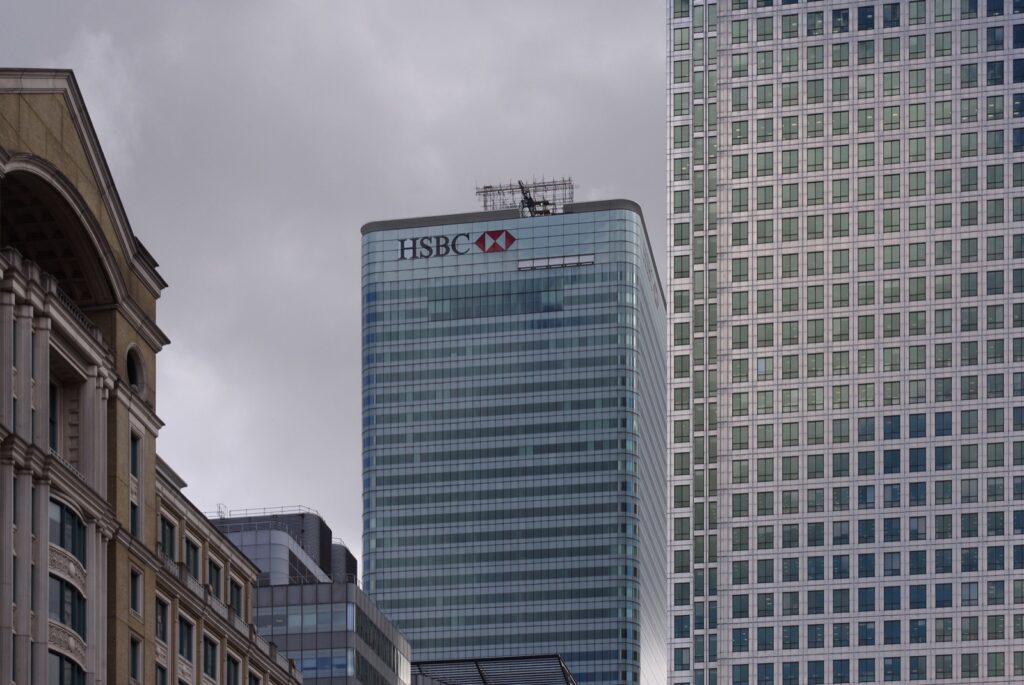
HSBC sits on both sides. Manish Kohli, Head of Global Payments Solutions at HSBC, was quoted in the June launch of the US initiative, and HSBC UK is a GBTD participant. Any bank group with material operations in both markets will now plan its tokenised deposit connectivity around the same orchestration provider in both jurisdictions. That cuts integration work and concentrates operational risk. For other approaches to the same problem, see Canada’s Big Six tokenised deposit rail, Partior’s instant settlement network and Japan’s tokenised deposit test.
Quant’s own positioning is aggressive. “Tokenized deposits are now the de facto way banks move money on-chain,” said Gilbert Verdian, Founder and Chief Executive Officer of Quant, in the US release. Its boilerplate says it is “the only company with proven, production-grade capability” to connect blockchain networks and regulated financial institutions at scale. That is Quant’s own claim, and neither release offers independent evidence for it. On the UK side, Verdian said the GBTD transactions “are real money moving on UK infrastructure, not an experiment.”
“Building interbank infrastructure for tokenized deposits requires proven technology that can scale,” said Sal Karakaplan, Chief Strategy Officer of The Clearing House.
What neither release discloses
Neither announcement gives a contract value, a contract term or any exclusivity arrangement. Neither says who owns the code or the intellectual property of the deployed layer. Neither describes what happens if Quant fails, is acquired, or stops supporting the software: no escrow, step-in or exit provisions are mentioned. For a network wired into RTP and CHIPS, and a UK platform billed as shared industry infrastructure, those are the first questions a supervisor would ask about a third-party dependency. UK Finance says GBTD complements work by the Bank of England, HM Treasury, the Financial Conduct Authority and the Payment Systems Regulator, but does not say how any of them oversee the vendor layer.
There is also a sequencing risk. The US network has not launched, and its participation terms are still to be announced “as development progresses”. GBTD has completed three live retail transactions, not a production service. UK Finance says further pilots in the coming months will test digital-asset settlement, with participating banks issuing digital debt instruments whose coupons are paid in tokenised deposits. The shared announcement date also does not show that one code base runs in both deployments.
What to watch
The next useful disclosures are the US participation rulebook, whether GBTD moves from pilot to an operational service with a published governance model, and whether either operator names a second technology provider or a portability plan. If neither does before the H1 2027 US launch, the flagship US and UK interbank tokenised deposit projects will depend on one vendor. As with DTCC’s October tokenisation launch, the harder questions will be about who controls the stack, not whether it works.
This article is informational analysis only and is not financial, investment, or trading advice. Cryptocurrencies are highly volatile and can lose substantial value rapidly. Past performance and historical patterns do not guarantee future results. Do your own research and consult a regulated financial adviser before making any investment decision.
Karthik Subramanian

Karthik Subramanian is a founder, writer, and technology consultant with nine years in the crypto ecosystem. He covers token economics, L1/L2 infrastructure, DeFi protocols, wallets/custody, and the bridge between crypto and forex—broker technology, liquidity, and macro drivers. Karthik’s writing focuses on clear, practical frameworks that help professionals evaluate new products and on-chain innovation alongside FX market realities.
