SGX CEO Dishes on Company’s Future
The Chief Executive Officer of one of Asia biggest exchanges SGX said Singapore’s government deserves credit for its thriving financial services industry.

The Chief Executive Officer (CEO) of one of Asia biggest exchanges SGX said Singapore’s government deserves credit for its thriving financial services industry.
Loh Boon Chye is the CEO of SGX, a holding company located in Singapore which provides different services related to securities and derivatives trading, particularly its exchange the Singapore Exchange.
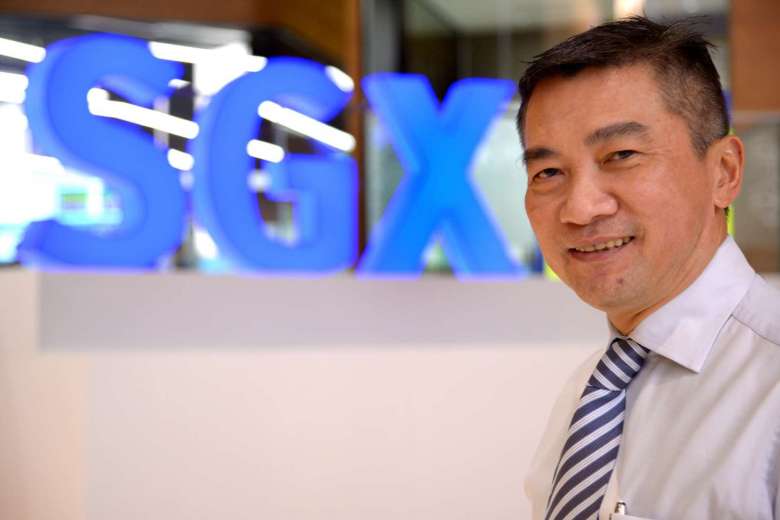
Chye was the latest guest on the podcast from the Futures Industry Association (FIA) called FIA Speaks, which is hosted by FIA’s CEO, Walt Lukken.
Lukken asked Chye what made Singapore such a hub for financial services.
“I give a lot to our government. I think it’s a government that promotes very efficient business environment. It is also a country that is well connected, whether by earnings or even by free trade agreements, and also one of the few AAA countries left, and the only in Asia,” Chye said.
Chye had a unique path to the CEO of a major exchange, something he explained in the podcast.
He went to school for engineering; he said he was well schooled in STEM, science, technology, engineering and mathematics.
He said his first job in financial services was on the regulatory side, working with the Monetary Authority of Singapore (MAS), which is Singapore’s central bank.
He also spent time on board of SGX before moving into the CEO’s role, which he did starting in July 2015.
Chye also described SGX’s business and his vision for where the company will be in the next five to ten years.
“We want to be a marketplace that provides a efficient and trusted platform for access into Asian markets,” Chye, “So, today we cover close to 100% of Asia’s GDP.”
Chye said SGX’s position gives it a good view into Asia’s markets and he described where he believed they were going: 1) lower rates for longer 2) the rise of passive investing and 3) continued good economic growth.
Chye said that academic research has found that in Asia good returns are driven largely by the right country selection.
He said 70% of returns are driven by proper country selection and “not so much in terms of asset class allocation.”
He continued, “If you want to be in the marketplace for Asian financial products, then you need to provide a platform that offers multiple asset products.”
SGX has three main business lines, Chye said, 1) FICC, fixed income, currencies, and commodities 2) equities and 3) data collectivity and indexes.
Chye said that FICC is its newest business lines while the equities side is its biggest revenue driver.
Chye said that the future should see an evolution in revenue drivers.
“We expect on a path of growth, but the mix of the revenues will be different in five years’ time. Broadly speaking, FICC and data connectivity indexes is about call it 30% roughly. I think that will grow and equities will also grow in absolute revenue contribution.”
Reporting by Michael Volpe. Filed 30 December 2019, 03:55 GMT.


